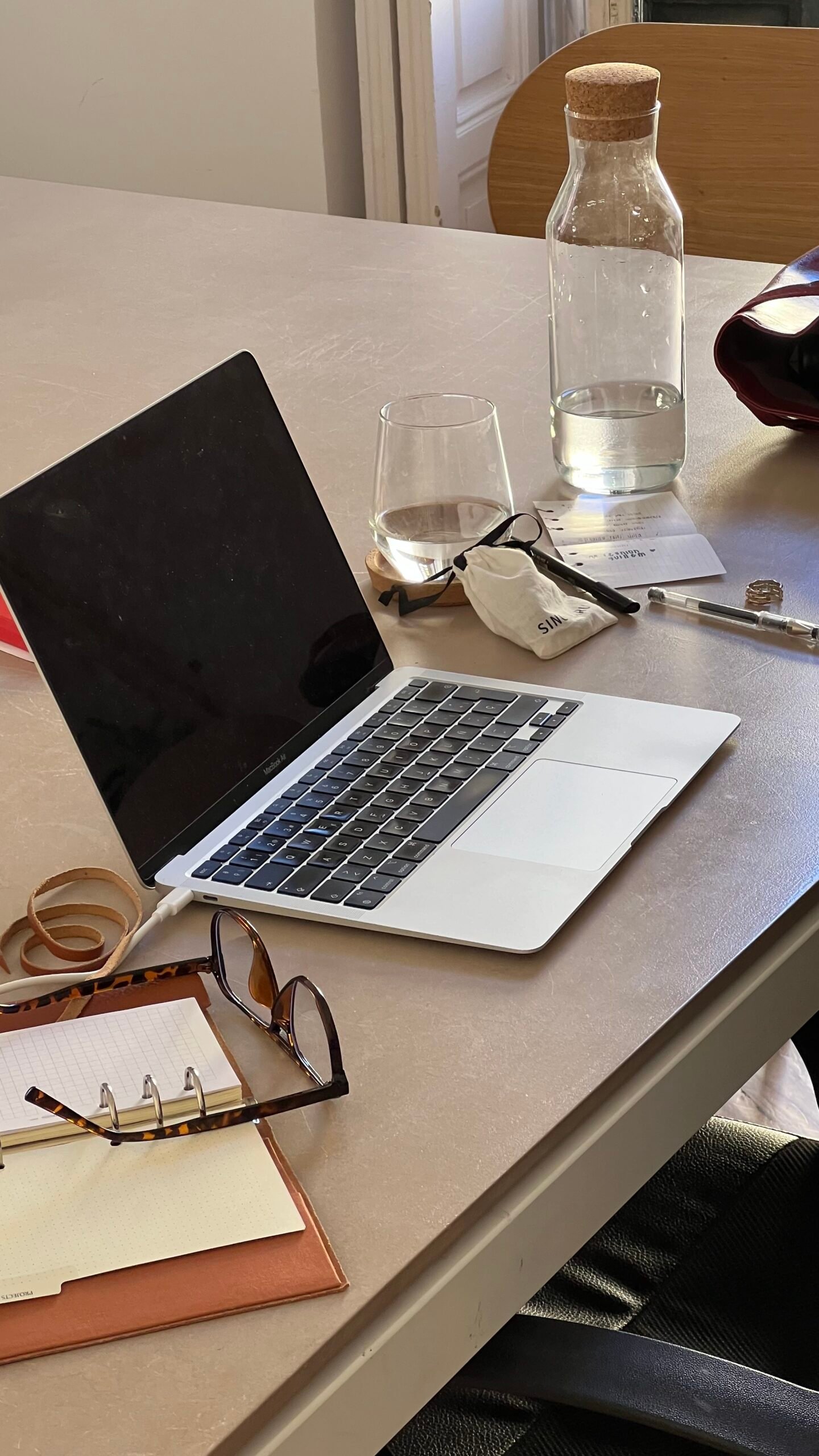
I was checking teams before my coffee cooled, rehearsing meeting comments two hours in advance, and closing my laptop at 6pm with a jaw I hadn’t unclenched since 9am. I wasn’t failing. I was functioning. And that, it turns out, was the problem.
If you’re trying to figure out how to stay ambitious without burning out, the answer isn’t doing less. It’s building a system that’s actually sustainable. I call it the Steady State Method: four practices that let you stay in a long career without letting it consume you.
The Stat That Should Make Every Ambitious Woman Pay Attention
According to McKinsey and Lean In’s Women in the Workplace 2025 report, the largest study on women in corporate America, six in ten senior-level women report frequently feeling burned out. That’s the highest level recorded since the study began.
It’s not because senior women are less capable of managing stress. It’s because the higher you climb, the more invisible labour gets added to your plate: managing up, absorbing team tension, anticipating problems before they surface. Women report burnout at 46% versus 37% for men according to Cariloop’s 2025 workplace research. The gap isn’t closing.
This isn’t a you problem. But the solution still starts with you.
The Steady State Method
The goal isn’t peak performance all the time. The goal is a sustainable baseline you can maintain for decades. The Steady State Method is built around four practices: Signal Check, Boundary Architecture, Energy Design, and Pace Control. You don’t need all four running perfectly. You need them running consistently.
Signal Check
This is the foundation, and it’s the part most people skip because it sounds soft. It isn’t.
A Signal Check is a 30-second internal scan you run three times a day: morning, midday, and end of day. Three questions. What’s my body doing right now? Jaw clenched? Shoulders raised? Breathing shallow? Am I reacting or responding? Did I send that email because it needed to go, or because sitting with it felt uncomfortable? What story am I telling myself? Am I assuming the silence in that meeting meant disapproval? Am I catastrophising neutral feedback?
Your nervous system doesn’t differentiate between a physical threat and a passive-aggressive Slack message. Both trigger the same physiological response: heart rate up, muscles tight, breathing shortened. Occasionally that sharpens you. Daily, it drains you.
The end-of-day Signal Check also solves something most ambitious women struggle with: not being able to switch off after hours. The most effective version is a deliberate close-out at the end of the workday. Note what’s done, what’s open, and what you’re consciously setting down until tomorrow. Without that intentional release, your brain keeps running background processes on every unresolved conversation while you’re supposedly watching Netflix. The Signal Check exists specifically to interrupt that loop.
It doesn’t fix the system. It gives you a moment to choose how you move inside it instead of reacting on autopilot.
Boundary Architecture
Most boundary advice is too simple for corporate life. “Just leave at 6pm.” Sure, but what about your skip-level’s 5:45 invite? “Don’t check email after hours.” Sure, but what about the Sunday night anxiety spiral?
The Steady State Method splits boundaries into two layers.
External boundaries are the visible, structural ones, and they only work if you treat them as non-negotiable rather than aspirational. Start with three: shorten meetings by five minutes so you can breathe between them, block one uninterrupted focus hour per day and decline anything that overrides it, and protect one evening per week with zero laptop time.
The fear underneath most boundary-setting hesitation is: if I protect my time, I’ll be seen as less committed. That fear is understandable and largely unfounded. What actually damages careers is chronic over-extension that leads to declining quality, missed details, and eventual burnout-driven exits. Protecting your capacity protects your output. Frame boundaries around output rather than preference. “I’m blocking this time to finish the project before the deadline” lands better than “I need focus time.” And be consistent. Boundaries respected only when convenient aren’t really boundaries.
Internal boundaries are the harder ones that actually determine your experience from the inside. These sound like: I will not replay that comment all evening. I will not measure my entire competence against one awkward presentation. I will not assume silence equals disapproval.
You don’t control every external demand. You control the narrative you build around it. When a project gets reworked, you can interpret it as failure or as iteration. These are micro-decisions. Over time they shape your experience of work more than any single promotion or setback.
Energy Design
Most productivity advice focuses on time. The Steady State Method focuses on energy, because they are not the same thing.
You may have eight hours available. You do not have eight hours of high-quality cognitive energy. Most people get four to five hours of sharp thinking. The rest is maintenance mode, and that’s fine, if you design around it.
Sharp hours in the morning are for deep work, strategy, writing, and anything requiring real thinking. The early afternoon second wind is better for creative work, meetings where you need to be present, and collaboration. Late afternoon lower energy is for email, admin, and calendar management. One uninterrupted focus session per day is non-negotiable, scheduled whenever your energy peaks.
The other piece nobody talks about: micro-recovery. Not weekend recovery. Daily recovery. A five-minute walk after a difficult conversation. A few minutes of silence between meetings. Lunch away from your desk. These sound small. They’re the difference between arriving at Friday with capacity left versus arriving completely hollowed out.
If you’ve had a full weekend off and still feel dread on Sunday evening, that’s your nervous system telling you something. Weekend fatigue that doesn’t resolve usually means your week is running a stress deficit that two days can’t close. The fix isn’t more sleep on weekends. It’s daily micro-recovery built into the week itself, not bolted on at the end.
Pace Control
There’s an unspoken norm in corporate life: everything is urgent. Every email feels time-sensitive. Every stakeholder conversation carries weight beyond the moment. When everything is urgent, nothing is sustainable.
The first time I said “I can deliver that tomorrow” instead of staying late that night, my whole body tensed up. I was convinced my manager would think I didn’t care. She didn’t even notice.
Most urgency in corporate life is manufactured. Not maliciously, just culturally. We’ve confused responsiveness with value. Run this filter before responding to anything with immediacy. What happens if this waits four hours? Usually nothing. Is the urgency coming from the task or from my fear of how I’ll be perceived? Am I the only person who can handle this right now? Almost never.
Pace Control isn’t about doing less. It’s about saying a real, full yes to the things that matter by saying no to the things that just feel urgent.
The Signs of Burnout That Don’t Look Like Burnout
This is the section that matters most for corporate women specifically, because high-functioning burnout is almost invisible, including to the person experiencing it.
You’re still hitting deadlines. Still showing up. Still performing. But something is off.
You feel detached from work you used to care about, but you’re still doing it well. Small decisions that used to be easy now feel exhausting. You’re getting sick more often than usual, because your immune system is keeping score. Weekends no longer feel restorative no matter how much you rest. You feel vaguely irritable or flat but can’t point to a specific reason. The Sunday dread starts on Saturday afternoon.
The marker isn’t your output. It’s whether work feels meaningful or just mechanical.
The Mayo Clinic distinguishes burnout from tiredness in one important way: tiredness resolves with rest. Burnout doesn’t. If you’ve had a full weekend off and still feel dread, or if you notice persistent cynicism or emotional flatness in work you used to care about, that’s burnout, not fatigue.
Burnout or Wrong Job?
This is the question nobody wants to sit with, but it’s worth asking honestly. Burnout and job misalignment feel similar: exhaustion, dread, disengagement. But they have different causes and different solutions.
It’s probably burnout if you used to enjoy this work and can remember what that felt like, if the exhaustion is about volume or pressure rather than the work itself, if you feel better on days when the workload is lighter, and if a different environment or manager would change things significantly.
It might be the wrong job if you can’t remember a time when this work felt meaningful, if even low-pressure days feel draining, if the disengagement is about the role or industry rather than current conditions, and if you feel genuine relief when you imagine doing something entirely different.
The Steady State Method works best for burnout. It’s a system for sustainable ambition in work you actually want to do. If the problem is the work itself, the system won’t fix it. That’s a different conversation, and it’s worth having honestly before investing more energy into optimising a role that might not be the right fit.
If You’re Already in Burnout
If you’re reading this already in burnout rather than trying to prevent it, the approach is slightly different.
Start by auditing your energy drains. Spend one week noting what tasks, conversations, or meeting formats leave you most depleted. Patterns will surface and that’s your roadmap for what needs to change first.
Then reduce before you optimise. Don’t try to build new habits while running on empty. Cut something first: one commitment, one recurring meeting, one obligation you’ve been carrying out of habit rather than necessity.
Then apply the Steady State practices one at a time, starting with the Signal Check. Awareness comes before action. Having it written down makes patterns visible in a way that mental notes never do. A notebook specifically for energy drain observations and Signal Check notes is worth keeping separate from your work notebook for exactly this reason.
The Long Game
You are not building a career for this quarter. You’re building it for decades. Decades require pacing.
There will be seasons of intensity: launches, promotions, stretch roles. There must also be seasons of maintenance: skill refinement, capacity rebuilding, actual rest. The problem isn’t intensity. The problem is permanence. When every week feels like a sprint, your body eventually revolts, not dramatically but slowly. Sleep stops being restorative. Sunday anxiety starts on Saturday. Things that used to bring you joy outside work stop feeling worth the effort.
Sustainable ambition is rhythmic. You don’t need to burn bright and fast. You need to burn steadily.
Once you’ve got the energy side under control, the financial side matters too. Money stress and work stress feed each other more than most people realise, and the Predictable Spend Method is a good next step. And if you’re thinking about whether your current role is worth staying in, the Salary Storyboard Method gives you the tools to negotiate your way to better conditions before making any bigger decisions.